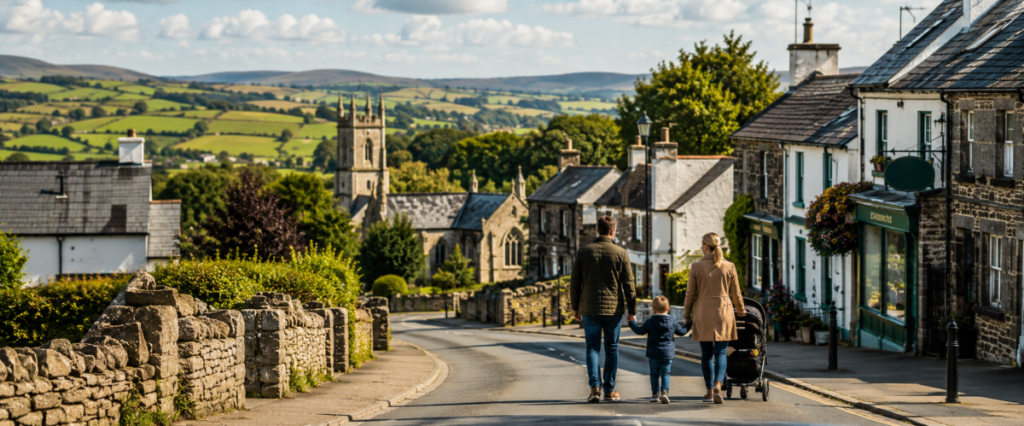
A powerful debate is raging in Ireland over the future of its rural communities, centering on a fundamental question: will young families be allowed to build homes in the places they grew up? With housing policy now recognized as a crucial factor for keeping schools open and GAA clubs thriving, the government’s updated rural housing planning guidelines are being hailed as a crucial step, but many argue it is not enough to reverse the steady depopulation of the countryside . The battle to secure a future for rural Ireland is no longer just a planning issue—it’s a fight for national identity.
For decades, Ireland’s rural heartbeat has been threatened by emigration and centralization. The recent call for a robust rural housing policy has brought this simmering issue to a boil, with prominent voices arguing that a community’s survival hinges on its ability to keep its young people at home. “Every time a son or daughter cannot build a home in the community where they grew up, rural Ireland loses something,” argues Peter ‘Chap’ Cleere, a Fianna Fáil TD and former hurler, in a powerful opinion piece . He frames the issue not just as a housing crisis, but as an existential threat to the Gaelic Athletic Association (GAA) and rural volunteerism itself.
The data supports his dire warning. While almost four in every five GAA clubs remain in rural Ireland, population growth is concentrating in a small number of urban and commuter areas . A stark statistic reveals that just 50 clubs are home to more than a quarter of all children aged zero to five, while almost 1,000 clubs serve just 22% . This demographic shift threatens the very fabric of rural life, endangering the local schools, small businesses, and volunteer networks that keep communities cohesive. This makes the issue of housing a matter of national cohesion.
The government has responded with updated Rural Housing Planning Guidelines, which aim to provide greater clarity and recognize the objective of sustaining rural communities . However, critics argue that more concrete action is needed. Cleere, for instance, emphasizes that housing policy cannot exist in isolation; it must be accompanied by major investments in water services, broadband, transport, childcare, and healthcare . “One without the other will never be enough,” he states, highlighting the complex ecosystem required to build a viable rural community.
Furthermore, the debate is inextricably linked to climate goals. While acknowledging the climate challenge, advocates for rural housing argue that the goal of reducing emissions should not mean that “no one can live in rural Ireland” . Instead, they call for “practical, workable supports,” such as expanding rural transport (Local Link) and improving electric vehicle charging infrastructure . The final outcome of this debate will be pivotal for anyone considering a move to the Irish countryside, determining whether they are investing in a thriving community or a fading one.