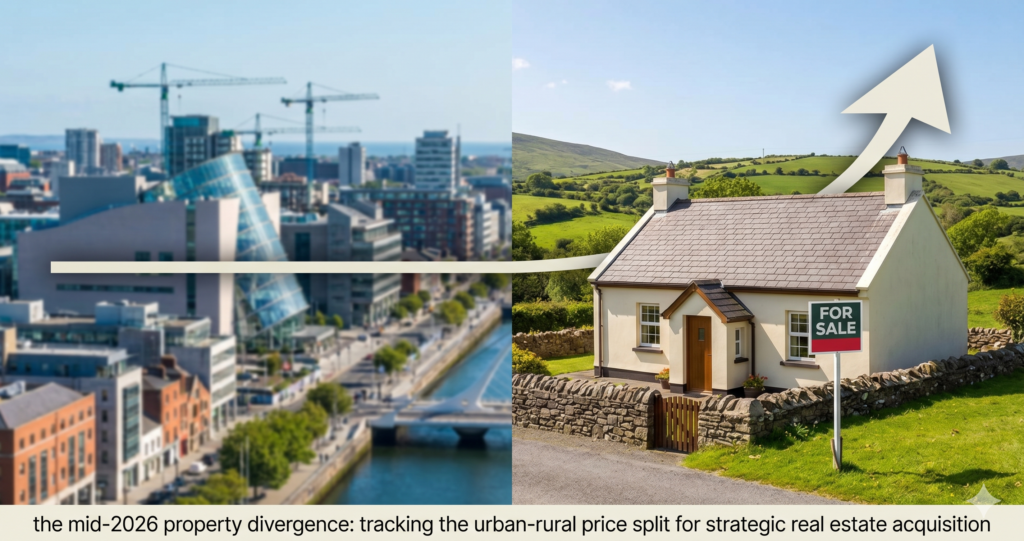
The freshly published Daft.ie Q2 2026 National Property Report has officially confirmed the emergence of a stark, “two-speed” residential market across Ireland. For international buyers, relocators, and passive property investors, understanding this structural divergence is critical to avoiding overpayment. In Dublin and other major metropolitan areas, a healthy supply recovery—with urban listing numbers up nearly 9% year-over-year—has successfully flattened hyper-inflation. In fact, transaction prices in the capital have registered an annual easing of over 2%, signaling the first real period of buyer breathing room since the pandemic.
However, looking outside the capital reveals an entirely different economic reality. Second-hand housing inventory across regional Ireland remains deeply constrained—sitting roughly 50% below historical pre-pandemic norms. This intense supply bottleneck has driven asking-price inflation to 6.3% in Munster and a striking 8.8% in Connacht-Ulster. For clients undergoing long-term settlement or seeking private retreats in rural Ireland, the strategy must pivot away from standard bidding wars. Success in today’s market relies heavily on targeting energy-efficient new-build completions (which saw a 17% transactional surge this year) or executing precision-led renovations supported by Ireland’s extensive vacant property refurbishment grants. Navigating this uneven landscape requires local buyer-side representation that understands where regional supply pipelines are opening up.