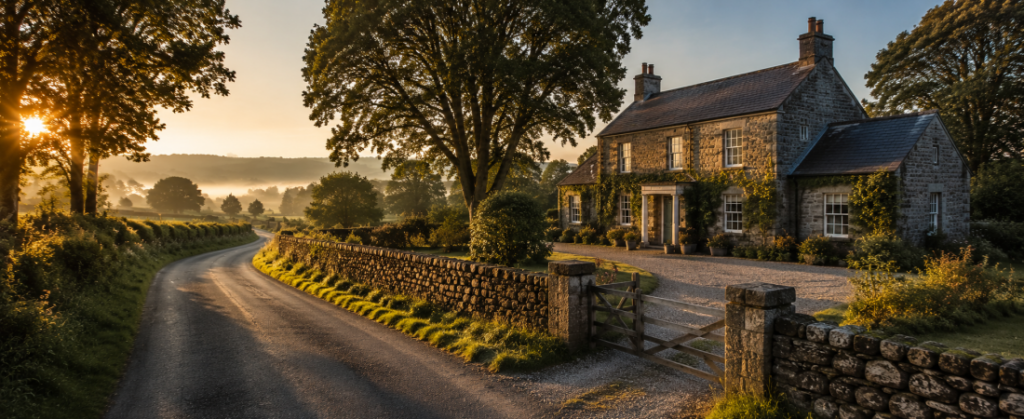
Sometimes the most interesting stories about Ireland never become international headlines. A recent report in the Roscommon Herald describing planning approval for a tourism accommodation project in County Roscommon initially appeared to be another local planning story. Yet after reading the report, it became clear that something much more significant was happening beneath the surface. It inspired me to explore why seemingly modest tourism developments are increasingly becoming indicators of how rural Ireland is attracting new visitors, new investment, and even new long-term residents. For anyone outside Ireland considering travel, relocation or future business opportunities, these local developments often provide a far more accurate picture of the country’s future than traditional tourist brochures ever could.
When people think about Irish tourism, their minds often turn immediately to Dublin, Galway, the Cliffs of Moher or the Ring of Kerry. While these destinations deserve their popularity, they represent only part of the Irish story. Across counties such as Roscommon, Leitrim, Longford and many other inland regions, a quieter transformation has been taking place.
Reading a recent planning report published by the Roscommon Herald encouraged me to investigate whether this was simply another isolated accommodation project or part of a much broader national trend. The more I researched, the clearer the picture became.
Ireland has increasingly focused on encouraging visitors to discover regions beyond the traditional tourist hotspots. Initiatives such as Ireland’s Hidden Heartlands, developed by Fáilte Ireland, promote the country’s lakes, rivers, forests, heritage towns and slower pace of life across the Midlands and northwest. The objective is not simply to attract more tourists, but to distribute tourism more evenly throughout the country while supporting local businesses and communities. (roscommonherald.ie)
This helps explain why relatively small accommodation developments are becoming increasingly important. Every new guesthouse, restored historic building, glamping development or boutique accommodation creates additional capacity that allows visitors to stay longer and explore regions that were previously overlooked. Similar tourism-related accommodation proposals have appeared across County Roscommon during the past two years, ranging from heritage restoration projects to glamping facilities and holiday accommodation conversions. (roscommonherald.ie)
For international readers, this offers an important insight.
Most visitors only experience Ireland for a few days, often following well-established coach routes. Those considering relocating, purchasing property or investing in Ireland need a much deeper understanding of how individual regions are developing over time.
Tourism investment frequently becomes an early indicator of wider regional confidence. Improved accommodation encourages more visitors. Increased visitor numbers support cafés, restaurants, outdoor activities and local retail businesses. In turn, stronger local economies often encourage further private investment and improvements in public infrastructure. Although this process develops gradually, it can significantly influence the long-term attractiveness of an area.
County Roscommon provides an interesting example of this gradual evolution. Positioned in the heart of Ireland, the county offers lakes, waterways, forests, historical estates and relatively affordable property compared with many coastal regions. While it remains less internationally known, continuing tourism investment suggests growing confidence in its long-term potential. (roscommonherald.ie)
Equally important is understanding what these developments do not necessarily mean.
A planning approval for tourism accommodation does not automatically transform an area overnight. Rural Ireland continues to present practical realities that prospective visitors and future residents should understand before making decisions. Public transport can be limited, many attractions require access by car, and services vary considerably between counties. These local realities are exactly why independent regional research becomes valuable for anyone planning more than a short holiday.
Rather than relying exclusively on national headlines or promotional brochures, following regional newspapers often provides a remarkably accurate picture of what is actually changing within local communities. Small planning applications, community projects and local investment announcements frequently reveal emerging trends months or even years before they receive wider national attention.
This is precisely why local reporting matters. The Roscommon Herald’s planning story was not merely about one accommodation project. It served as a reminder that Ireland’s future is being shaped through hundreds of individual local decisions occurring across towns and villages throughout the country.
For international readers, understanding these developments offers a practical advantage. Whether your interest lies in tourism, future relocation, property research or business opportunities, observing regional Ireland as it evolves provides a more balanced and realistic understanding of the country than guidebooks alone can offer.
At Final Resurrection Ltd., this broader perspective forms part of our independent research approach. Rather than focusing solely on major national announcements, we regularly analyse regional developments, local reporting and community-level changes that help international readers understand how Ireland is evolving on the ground before making important travel, relocation or investment decisions.