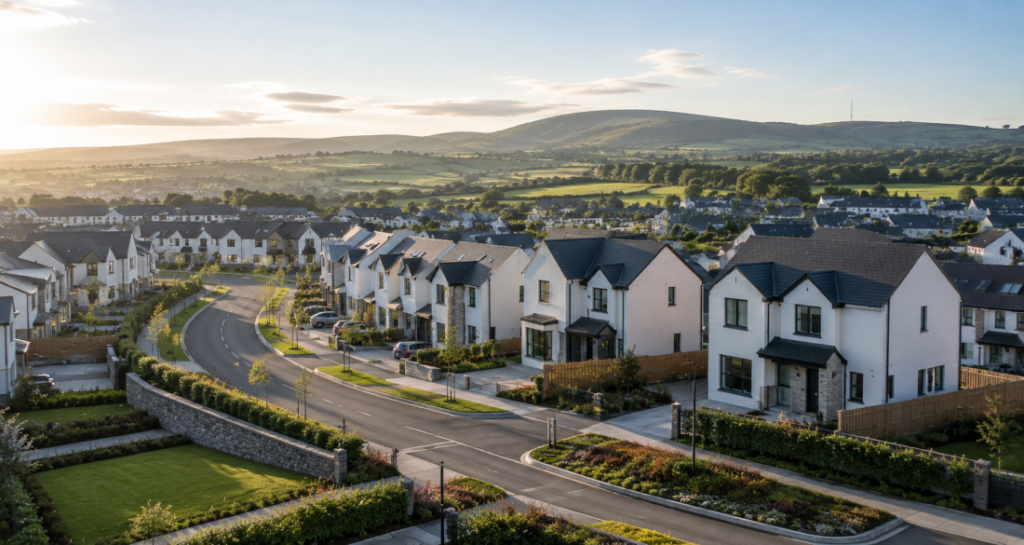
When I recently came across an RTÉ News report showing that more than 30,000 homes were under construction across Ireland—almost 28% more than a year earlier—it immediately caught my attention. At the same time, new planning rules allowing certain garden cabins and modular homes without traditional planning permission suggested that Ireland’s housing landscape may be changing faster than many people outside the country realise. Rather than simply reading the headlines, I decided to explore what these developments could actually mean for international families, entrepreneurs and future residents considering Ireland as their new home. The more I researched, the clearer it became that these individual news stories are part of a much broader picture that could significantly influence relocation decisions over the coming years. RTÉ also highlighted forecasts from EY suggesting that approximately 40,000 new homes could be completed during 2026, representing one of the strongest periods of residential construction in recent years. These developments deserve closer attention from anyone planning their future in Ireland. (Sources: RTÉ News – Housing; EY Housing Forecasts; Irish Government planning announcements.)
For many people considering a move to Ireland, housing remains one of the biggest concerns. International families frequently ask whether suitable homes are available, whether prices are stabilising and whether regional Ireland offers realistic alternatives to Dublin. While these questions cannot be answered by a single headline, recent developments suggest that Ireland’s housing market is gradually entering a new phase.
The RTÉ report showing more than 30,000 homes currently under construction immediately raised an interesting question. Does this simply represent a temporary increase in building activity, or could it indicate a long-term improvement for people planning to relocate? Looking beyond the original report revealed several encouraging signs.
According to EY’s latest housing forecasts, Ireland could complete around 40,000 new homes during 2026, one of the highest annual outputs in many years. Although demand remains exceptionally strong, this increase represents an important step towards addressing Ireland’s long-standing housing shortage. While additional supply alone will not solve every challenge overnight, it demonstrates continued investment in residential development across the country.
Another development attracted my attention while researching this topic. New planning regulations introduced in late July allow certain detached garden cabins and modular buildings to be constructed without requiring a traditional planning application, provided they comply with specific size, usage and building regulations established by the Irish Government.
For international readers, this may appear to be a relatively small planning change. In reality, it reflects a broader shift towards more flexible housing solutions.
Many families relocating to Ireland are not simply searching for a house. Increasingly they are planning for changing lifestyles that include remote working, caring for elderly parents, accommodating adult children, creating home offices or establishing guest accommodation. Small independent living spaces within existing residential properties could become an increasingly practical option for many households.
Ireland has also experienced significant changes in working patterns since the growth of remote and hybrid employment. While Dublin continues to attract many international professionals, increasing numbers of people now consider regional counties where property prices may be lower while maintaining professional careers through flexible working arrangements.
This broader perspective becomes particularly important for international readers researching Ireland from abroad. Reading isolated headlines about rising prices or housing shortages can sometimes create the impression that relocating is becoming impossible. Equally, headlines celebrating increased construction may suggest that every problem has already been solved. Neither interpretation fully reflects reality.
Successful relocation depends on understanding regional differences.
Housing availability varies considerably between counties. Infrastructure, schools, healthcare access, broadband quality, transport connections and employment opportunities differ from one region to another. A location that perfectly suits one family may be completely unsuitable for another.
This is precisely why combining official statistics with independent local research often provides the clearest picture.
Government announcements explain new regulations. National media report the latest developments. Property websites advertise available homes. However, international buyers frequently need something more practical: an independent assessment that explains how these individual pieces fit together within the realities of everyday life in Ireland.
For entrepreneurs considering relocating their businesses, international families planning a permanent move or overseas buyers searching for suitable property, understanding local conditions before making significant financial commitments can reduce uncertainty and help avoid costly misunderstandings.
The recent housing developments therefore represent more than simply construction statistics.
They demonstrate that Ireland continues investing in expanding housing supply while simultaneously introducing more flexible approaches to residential living. Although challenges certainly remain, the direction of travel appears encouraging for those planning their future here.
For anyone researching Ireland from abroad, perhaps the most valuable lesson is this: individual headlines rarely tell the whole story. Looking deeper often reveals practical opportunities that are easy to overlook. As Ireland’s housing market continues to evolve, informed decisions will increasingly depend on understanding both the official facts and the local realities behind them. That combination of reliable information and practical insight is exactly what international readers need when deciding whether Ireland could become their future home.