When reports emerged that Boston Scientific had notified the Irish Government of potential job reductions as part of a worldwide restructuring programme, many readers outside Ireland could understandably interpret the news as a warning sign for the country’s economy. However, reading only the headline tells only part of the story. After reading the original report, it prompted me to look more closely at what is actually happening behind the announcement—and whether international entrepreneurs, investors and future residents should really be concerned. The deeper research revealed a far more interesting picture, one that demonstrates why understanding Ireland often requires looking beyond individual news stories and examining the wider economic landscape.
One of the challenges for anyone researching Ireland from abroad is that individual news headlines can easily be misunderstood without local context. A report about proposed job reductions naturally attracts attention, yet international readers often have little opportunity to compare that news with other developments taking place across the country at the same time.
The original report explained that Boston Scientific has notified the Irish authorities that at least thirty positions could potentially be affected as part of a global restructuring programme. Such notifications are a legal requirement in Ireland whenever collective redundancies above a certain threshold are proposed. More importantly, the company also reaffirmed that Ireland remains an important part of its global operations after more than thirty years in the country, employing over 7,000 people across Galway, Cork and Clonmel.
That statement immediately raised an interesting question.
If Boston Scientific still considers Ireland strategically important, why announce restructuring?
The answer appears to lie not in Ireland itself, but in the changing priorities of multinational companies worldwide. According to the company’s restructuring announcement, Boston Scientific intends to optimise its global supply chain, improve operational efficiency, relocate selected production activities where appropriate and reinvest significant savings into future growth initiatives. In other words, this is a worldwide corporate restructuring rather than an Irish-specific withdrawal.
For international entrepreneurs, this distinction matters enormously.
Large multinational companies regularly rebalance manufacturing locations, research activities and corporate structures as technologies evolve. Ireland has experienced such adjustments before, yet the country’s life sciences and medical technology sector has continued to expand over the long term.
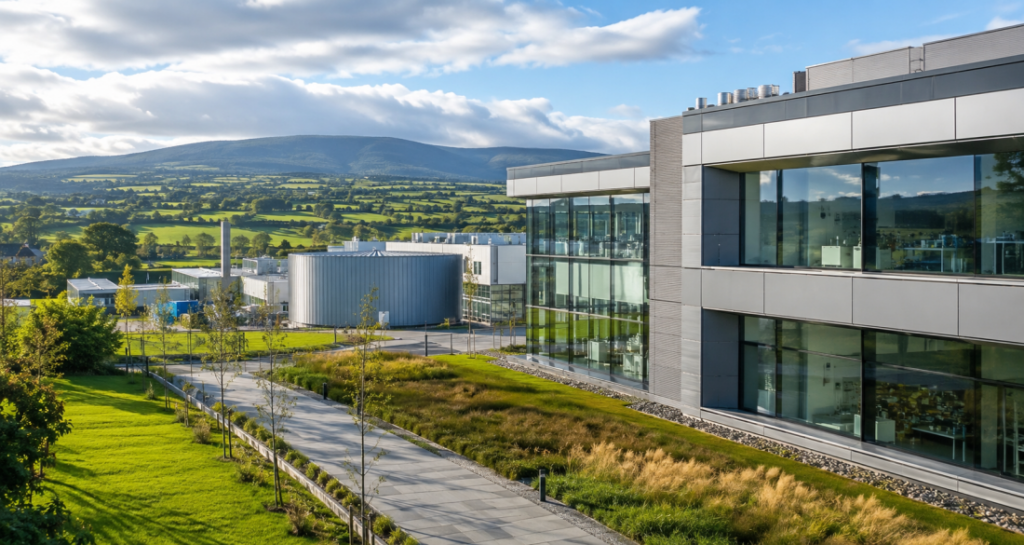
In fact, looking beyond the restructuring announcement reveals another important piece of information that many international readers may never see. Only a few months ago, Boston Scientific announced a further €75 million investment in expanding its research and development capabilities in Galway, strengthening Ireland’s position as one of the company’s global centres for cardiovascular innovation. The investment includes new laboratories, additional research capability and long-term commitment to advanced medical technology development.
This wider perspective changes the interpretation considerably.
Rather than signalling that Ireland is becoming less attractive, the evidence suggests that multinational companies are increasingly concentrating higher-value research, engineering and innovation activities while simultaneously improving operational efficiency worldwide.
The same broader picture can be seen across Ireland’s investment landscape.
IDA Ireland recently reported that despite increasing international competition, the country continues to attract substantial foreign direct investment across technology, medical devices, pharmaceuticals, artificial intelligence and financial services. New investments announced during the first half of the year include expansions by companies from North America, Europe, Asia and the Middle East, creating hundreds of additional highly skilled jobs across several Irish regions.
For someone considering establishing a business, relocating or investing in Ireland, this illustrates an important lesson.
Individual headlines rarely tell the complete story.
Successful decision-making requires understanding how isolated events fit into wider economic trends. One company may restructure while another expands. Certain manufacturing activities may become more automated while research facilities continue growing. Global business constantly reallocates resources, and Ireland’s economy is deeply integrated into those international changes.
This is precisely why independent local research has become increasingly valuable for international clients.
Official announcements explain regulations. Corporate press releases naturally present their own perspective. News reports focus on individual developments. What is often missing is an independent assessment that connects these different pieces into a practical understanding of what they actually mean for someone planning to establish a company, relocate, purchase property or invest in Ireland.
For international readers, that may ultimately be the most valuable lesson behind the Boston Scientific story. The headline may describe thirty jobs potentially at risk, but the wider research reveals an economy that continues attracting international investment, expanding research capability and strengthening its position as one of Europe’s leading centres for medical technology and innovation.
Looking beyond the headline often provides a much clearer picture of Ireland than the headline itself.