The South East’s largest regeneration programme is no longer a vision on paper—it is becoming visible in the streets, transport links and investment confidence of Waterford. While Ireland often focuses on Dublin’s growth, March 2026 demonstrated that one regional city is quietly positioning itself as one of the country’s most important economic and lifestyle success stories.
For decades, Waterford has combined a rich Viking heritage with a strong industrial base, world-famous craftsmanship and a strategic position on Ireland’s south-east coast. Yet much of its potential remained underappreciated. Throughout March 2026, however, a series of developments highlighted how rapidly the city is changing. Infrastructure investment, urban regeneration, transport improvements and renewed business confidence are reshaping Waterford into a city that increasingly attracts investors, entrepreneurs, future residents and visitors alike.
At the centre of this transformation stands the North Quays Strategic Development, one of Ireland’s largest urban regeneration projects outside Dublin. The long-awaited redevelopment is creating an entirely new gateway to the city, integrating residential neighbourhoods, commercial offices, hospitality facilities, public spaces and improved transport connections. What was once largely underused riverside land is steadily evolving into a modern extension of the historic city centre.
Infrastructure improvements are extending well beyond the construction site itself. Road upgrades, pedestrian connections and transport planning are designed to better connect Waterford with the wider South East region. Improved accessibility not only benefits residents but also strengthens the city’s attractiveness for employers seeking locations outside the increasingly expensive Dublin market.
Education continues to play an equally important role. The South East Technological University (SETU) has become an increasingly significant source of skilled graduates, innovation partnerships and research activity. Together with a growing number of technology companies, engineering firms and international manufacturers already operating in the region, this creates an ecosystem capable of supporting sustainable long-term economic growth.
The city’s quality of life remains one of its strongest competitive advantages. Housing generally remains more affordable than in many other Irish cities, commuting times are considerably shorter, and the surrounding coastline, mountains and countryside provide immediate access to outdoor recreation. Increasingly, professionals seeking a better work-life balance are beginning to recognise Waterford as a realistic alternative to larger urban centres.
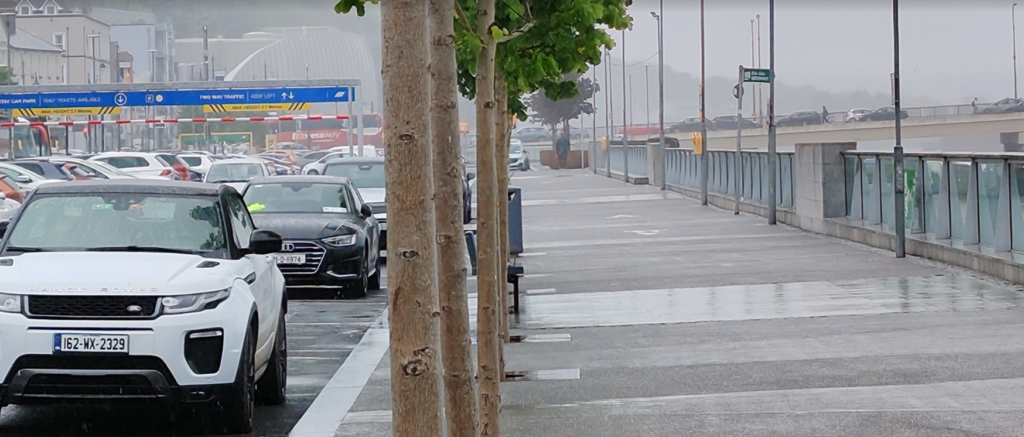
Walking along the city’s waterfront on a typical March morning, the transformation may not immediately appear dramatic. Cars continue their daily routines, commuters make their way to work, and the River Suir quietly flows through the city as it has for centuries. Yet beneath this familiar rhythm, significant structural changes are taking place. Investment decisions made today will influence how businesses operate, how people commute, where families choose to live and how international investors perceive Ireland’s South East for decades to come.
Waterford’s story is no longer simply one of preserving history. It has become a case study in how regional cities can combine heritage, infrastructure investment and economic ambition without losing their identity. As Ireland continues to experience population growth and increasing pressure on its largest urban centres, Waterford’s measured but determined transformation may prove to be one of the country’s most important regional success stories.