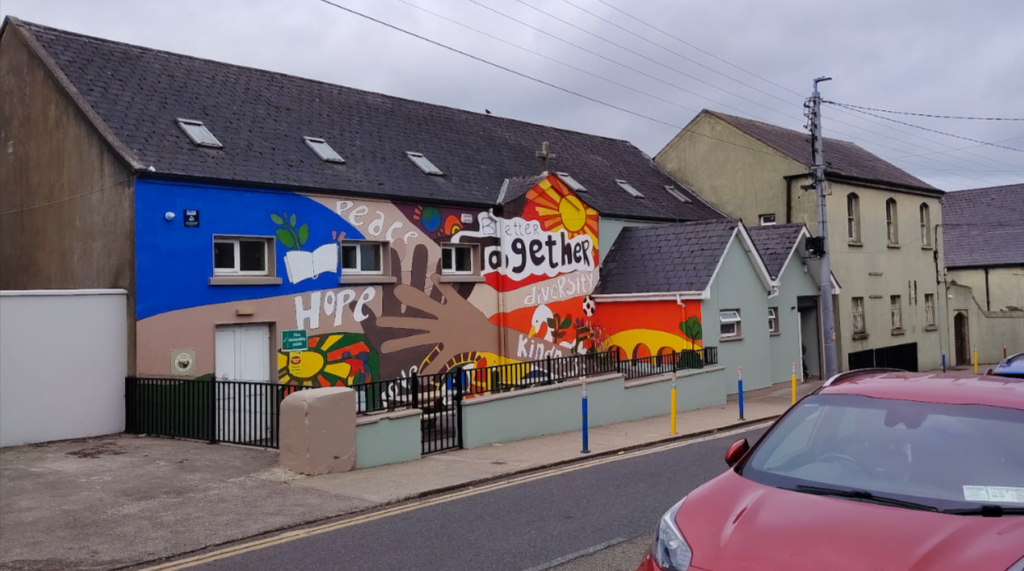
Across Ireland, colourful murals are becoming far more than decorative landmarks. From small market towns to regional communities, public art is creating shared spaces that celebrate local identity, encourage inclusion and remind residents that the strongest communities are often built through everyday acts of connection. In places like Enniscorthy, these vibrant walls are transforming ordinary streets into lasting symbols of hope, diversity and belonging.
Across Ireland, public art has become one of the most visible expressions of community pride. While major cities continue to invest in galleries and cultural institutions, many smaller towns are discovering that a painted wall can achieve something equally valuable: bringing people together around a shared story.
In February 2026, community-led regeneration continues to receive growing attention as local authorities, voluntary organisations and arts initiatives recognise the role that creative public spaces can play in strengthening neighbourhoods. Murals celebrating kindness, diversity, education and cooperation are appearing in towns across the country, reflecting not only artistic ambition but also the values communities wish to preserve for future generations.
One striking example can be found in Enniscorthy, County Wexford, where a vibrant mural transforms the side of an otherwise ordinary building into a powerful statement of unity. Words such as Peace, Hope, Together, Diversity and Kindness are woven into a colourful composition centred around two outstretched hands reaching towards one another. The artwork does not commemorate a historical event or celebrate a famous individual. Instead, it highlights something much more universal: the importance of people working together despite different backgrounds, experiences and generations.
This type of public artwork represents an important shift in how communities think about shared spaces. Rather than viewing walls simply as functional structures, towns increasingly see them as opportunities to communicate local identity, encourage civic pride and create places where residents naturally stop, reflect and interact. Public art becomes part of everyday life rather than something confined to museums or galleries.
The benefits extend beyond aesthetics. Colourful murals often become recognisable landmarks that strengthen a town’s visual identity, encourage walking and exploration, support local tourism and provide attractive backdrops for community events. Visitors frequently discover that these artistic spaces reveal something authentic about the people who live there—offering a glimpse into the values, optimism and resilience that define modern Ireland beyond its better-known tourist destinations.
Community participation is frequently at the heart of these projects. Local schools, youth organisations, volunteers and artists often contribute ideas during the planning process, ensuring that the finished work reflects a genuine collective voice rather than an external vision imposed upon the neighbourhood. This collaborative approach helps create a sense of ownership that extends long after the final brushstroke has dried.
At a time when many societies face increasing social fragmentation, Ireland’s investment in community-focused public art offers a quietly effective alternative. Rather than focusing solely on physical infrastructure, these projects also strengthen social infrastructure—the relationships, trust and shared identity that enable communities to respond positively to future challenges.
As Ireland continues investing in regional development throughout 2026, murals like the one in Enniscorthy demonstrate that meaningful regeneration is not measured only by new buildings or upgraded roads. It is equally reflected in the public spaces where people feel welcome, recognised and connected. Sometimes the most enduring investment a community can make is not built from concrete or steel, but painted in colours that remind neighbours they belong to something larger than themselves.