Someone considering a move to Ireland in 2027 may naturally begin with immigration: Can I legally live there? Can I work there? How long until I could become an Irish citizen?
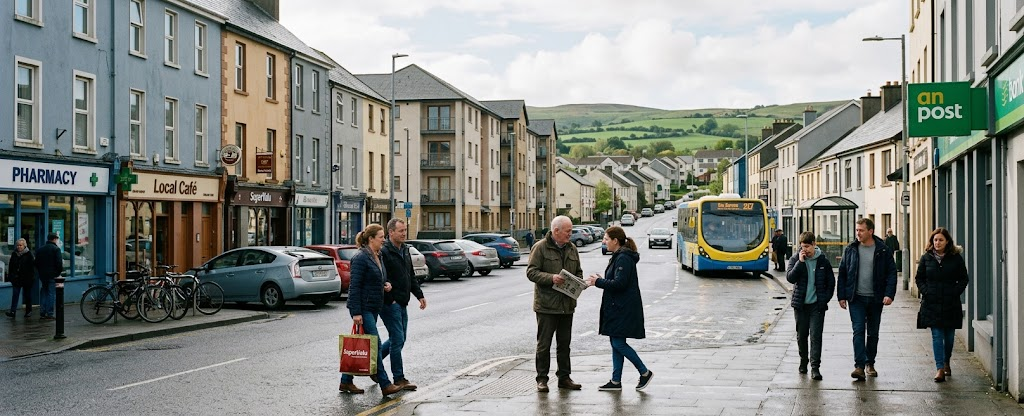
Those questions matter more than ever. Ireland is preparing significant changes to its naturalisation system, including a proposed increase in the standard qualifying residence period from five to eight years.
But for somebody planning a life from thousands of kilometres away, there is a more immediate question:
Even if Ireland says you can live here, can the particular life you want actually work here — and where?
That distinction between eligibility and suitability may be more important to a successful relocation than any national ranking of Ireland as a place to live.
What Has Changed?
First, an important distinction between law and proposal.
Under the rules currently published by Immigration Service Delivery, an adult applying for citizenship by naturalisation on the normal residence route generally needs five years of reckonable residence: one continuous year immediately before applying plus four years during the preceding eight years. Applicants must also satisfy other requirements, including good character and an intention to continue residing in Ireland.
That remains the current general rule.
However, in September 2026 the Government approved priority drafting of major reforms to naturalisation legislation. The proposals include increasing the qualifying period from five to eight years for most applicants, introducing English, Irish or Irish Sign Language proficiency requirements and a civics/society test, and introducing economic self-sufficiency criteria.
Those proposals should not yet be described as though every detail were existing law. Legislation and implementing rules still matter.
There has already been a confirmed change for people granted International Protection: since December 2025, they generally require five years of reckonable residence before applying, rather than the previous three-year route.
For somebody contemplating a 2027 move, the lesson is straightforward: check the immigration pathway that applies to you at the time you move rather than building a ten-year life plan around today’s rules.
Why It Matters to a Future Resident
Ireland continues to need international workers.
For non-EEA nationals, an employment permit is generally required unless an exemption applies, and Ireland continues to adjust permit eligibility in response to labour shortages. In May 2026, for example, the Government announced 32 occupational changes targeting shortages including construction, healthcare, transport and agri-food.
Meanwhile, Ireland’s underlying economy remains relatively strong. The Central Bank’s September forecast projects Modified Domestic Demand growth of 3.8% in 2026 and 3.4% in 2027. Net inward migration accounted for almost three-quarters of Ireland’s population increase in the year to April 2026.
So Ireland can simultaneously need international talent while making long-term citizenship requirements more demanding.
That is not necessarily a contradiction.
Immigration permission, permission to work, permanent life planning and eventual citizenship are different stages of the decision.
The Often-Overlooked Point
Here is the issue relocation guides often miss:
Your immigration status is national. Your life is local.
A visa or employment permission may allow someone to live in Ireland. It cannot tell them whether they can find suitable housing within commuting distance of their job, whether their partner can find work, whether their children can reach the right school, or whether living without two cars is realistic.
The housing difference alone is enormous.
The latest CSO data puts the median Irish residential purchase price at €399,999, but the geographical spread runs from €684,411 in Dún Laoghaire-Rathdown to €200,000 in Longford. At Eircode level, Blackrock’s A94 recorded a median of €850,500 while F45 around Castlerea, County Roscommon, was €158,500.
That does not mean Castlerea is “better value” for every future resident.
It means €158,500 and €850,500 are buying very different combinations of property, connectivity, employment access and everyday geography.
Ireland Is Not One Location
This is where generic questions such as “Is Ireland a good place to live?” become almost meaningless.
A software professional working in Dublin, a self-employed consultant working remotely from Roscommon, a family needing two workplaces and schools, and a retired couple prioritising healthcare access may all reach different conclusions.
Regional Ireland is also changing. TFI Local Link now provides extensive rural connections, with new and enhanced routes under the Connecting Ireland programme linking towns and villages with hospitals, railway stations and larger transport networks. But frequency varies considerably: some routes offer regular daily and evening services, while certain door-to-door services may operate daily, weekly or even fortnightly.
“Public transport available” is therefore not the same as “public transport compatible with my life.”
The same principle applies to broadband, healthcare, schools and airport access.
One Life, Different Answers
Imagine a 48-year-old international consultant who can work remotely, has a partner and one teenage child.
Dublin provides the widest concentration of employment and transport connections, but housing costs could fundamentally alter the family’s budget.
A regional town may reduce the property cost dramatically and provide more space. But suppose the partner needs access to a specialised employment market, the teenager requires a particular school, and international business travel means reaching Dublin Airport twice each month.
Suddenly the question is not:
Dublin or countryside?
It becomes:
Which Irish location produces the best combination of housing, work, education, transport and connectivity for this particular household?
For another person — perhaps a retired couple who rarely needs an airport but prioritises hospital access and walkable everyday services — the answer could be completely different.
Questions to Ask Yourself Before Deciding
Before deciding that Ireland is your future, ask:
- What immigration or residence status would actually apply to me — and which parts of my long-term plan depend on rules that may change?
- Where will my income come from, and does that require proximity to a particular Irish employment market?
- What three services must I be able to reach easily every week?
- Could my household realistically function with the transport available in the location I am considering?
- If housing costs force me 50 or 100 kilometres away from my preferred location, does the relocation still make sense?
The fifth question may change the entire decision.
When General Relocation Information Stops Being Useful
National statistics are useful for understanding Ireland.
They become progressively less useful when deciding whether your life works in Ireland.
Ireland’s housing supply is increasing, but the Central Bank now expects approximately 39,500 completions in 2026, rising to 45,000 in 2028, and warns that delivery remains constrained by infrastructure and that the planning-to-completion process has lengthened substantially.
That tells a future resident something important about the national housing environment.
It does not tell them whether they can find an appropriate house in Athlone, commute from Mullingar, operate a business from Wexford or retire comfortably near Sligo.
At that point, research has to become personal and geographical.
Conclusion: Eligibility Is Only the Beginning
Ireland in 2027 may offer employment, business opportunities, community, attractive regional living and, for eligible people, a long-term pathway towards citizenship.
It also has expensive housing, infrastructure constraints and enormous differences between locations.
The developing citizenship reforms make one thing especially clear: anyone planning a long-term move should separate three questions that are easily confused.
Am I legally able to move to Ireland?
Can I build the life I want in Ireland?
And where in Ireland does that life actually work?
Only the first can primarily be answered by immigration rules.
Final Resurrection Ltd. can independently examine how a proposed life in Ireland would work in practice by comparing locations, costs, infrastructure and other relevant local conditions against the client’s actual priorities.
That does not replace immigration, legal, tax or financial advice. It addresses a different question: whether the Ireland that exists beyond the eligibility rules fits the life the prospective resident actually intends to live.